

COLA NUT
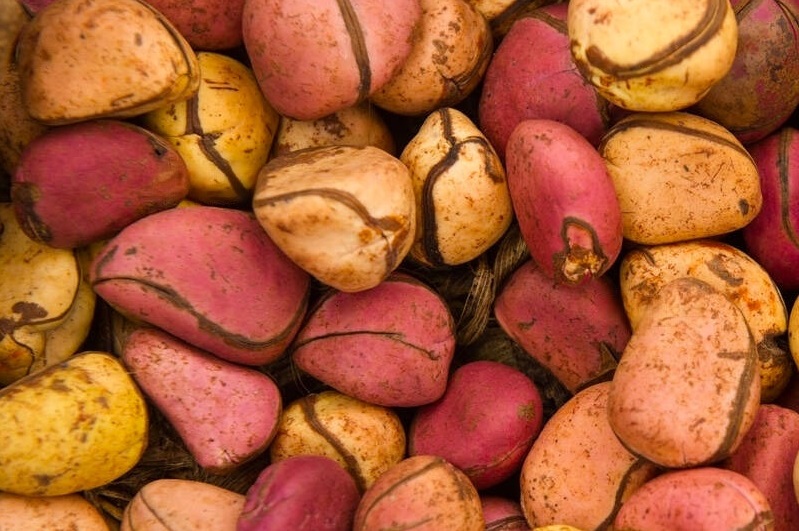
The cola nut, also called the cola nut, is the seed of the cola tree (Cola nitida or
Cola acuminata), a tropical tree of the Sterculiaceae family, native to the
rainforests of West and Central Africa. Used for thousands of years by African
populations, it is recognized for its stimulant properties, its high caffeine
content, and its cultural value.
Uses of cola Nut
Cola nuts are consumed in various ways, depending on traditions and needs.
Traditional consumption:
Chewing: In Africa, fresh or dried seeds are chewed thoroughly to release their
active ingredients. Their taste is initially bitter and astringent, but becomes
sweet in the mouth. This practice is common to combat fatigue, hunger, or
thirst.
Offerings and rituals: Used as a symbol of respect or in religious ceremonies
(for example, in Candomblé or Santeria).
Food Industry: Formerly used as a source of caffeine in soft drinks (Coca-Cola),
it is now used as a natural flavoring in certain products.
Traditional Medicinal Uses:
Treatment of dysentery, morning sickness, migraines, fever, or indigestion.
Use as an aphrodisiac or sexual tonic.
Health Benefits
Thanks to its rich composition, the cola nut offers numerous benefits,
supported by traditional uses and some scientific studies.
Stimulating and anti-fatigue effect:
Caffeine stimulates the central nervous system, increasing alertness,
concentration, and cognitive performance (attention, memory, learning).
Reduces the feeling of physical and intellectual fatigue, ideal for students, night
shift workers, or those undergoing prolonged exertion.
The cola nut, also called the cola nut, is the seed of the cola tree (Cola nitida or
Cola acuminata), a tropical tree of the Sterculiaceae family, native to the
rainforests of West and Central Africa. Used for thousands of years by African
populations, it is recognized for its stimulant properties, its high caffeine
content, and its cultural value.
Uses of cola Nut
Cola nuts are consumed in various ways, depending on traditions and needs.
Traditional consumption:
Chewing: In Africa, fresh or dried seeds are chewed thoroughly to release their
active ingredients. Their taste is initially bitter and astringent, but becomes
sweet in the mouth. This practice is common to combat fatigue, hunger, or
thirst.
Offerings and rituals: Used as a symbol of respect or in religious ceremonies
(for example, in Candomblé or Santeria).
Food Industry: Formerly used as a source of caffeine in soft drinks (Coca-Cola),
it is now used as a natural flavoring in certain products.
Traditional Medicinal Uses:
Treatment of dysentery, morning sickness, migraines, fever, or indigestion.
Use as an aphrodisiac or sexual tonic.
Health Benefits
Thanks to its rich composition, the cola nut offers numerous benefits,
supported by traditional uses and some scientific studies.
Stimulating and anti-fatigue effect:
Caffeine stimulates the central nervous system, increasing alertness,
concentration, and cognitive performance (attention, memory, learning).
Reduces the feeling of physical and intellectual fatigue, ideal for students, night
shift workers, or those undergoing prolonged exertion.