

ALKALIZED COCOA POWDER
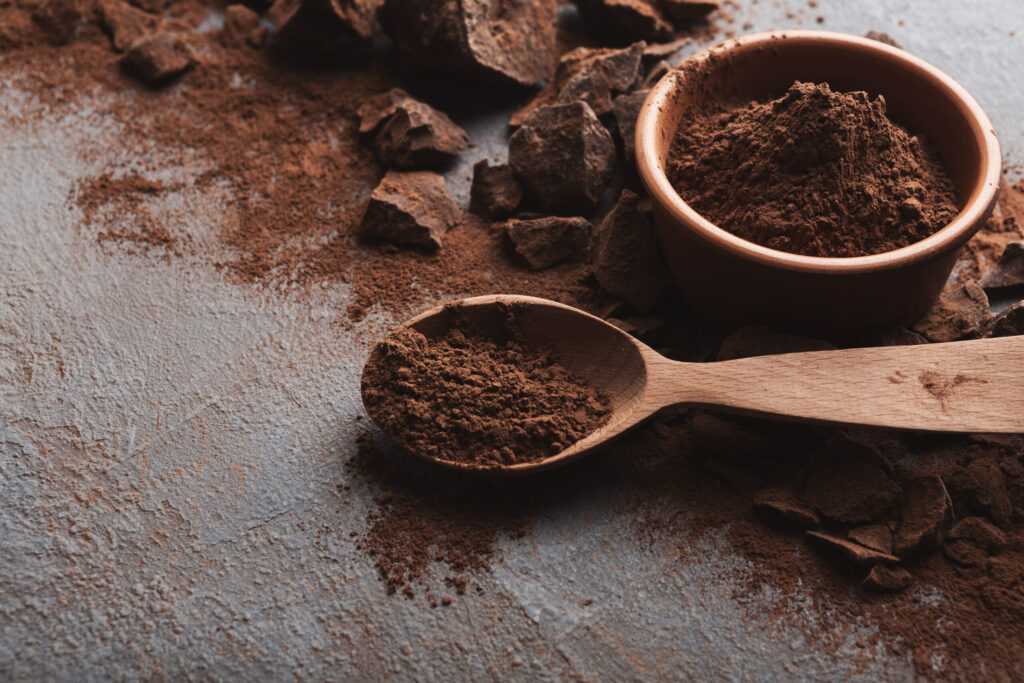
Alkalized cocoa powder is cocoa powder that has undergone a chemical
process called alkalization. This process involves treating the cocoa beans or
cocoa mass with an alkaline solution, usually potassium carbonate or sodium
bicarbonate.
Color: Darker (reddish-brown to almost black) than natural cocoa.
Flavor: Milder, less acidic, and less bitter than unalkalized cocoa, with rounder,
chocolatey notes.
pH: The alkalization process raises the pH of cocoa from 5-6 (natural cocoa) to
around 7-8, neutralizing the acidity.
Solubility: Better dispersion in liquids, making it ideal for beverages and certain
preparations.
Texture: Finer and smoother, making it easier to incorporate into recipes.
Alkalized cocoa powder is highly prized in cooking and baking for its rich flavor
and intense color.
Uses for Alkalized Cocoa Powder
1-Pastries
Cakes and Cakes: Used in chocolate cake recipes (such as devil's food cake) for
a dark color and deep flavor. Example: dark chocolate cake.
Cookies: Provides a smooth texture and even color to brownies, cookies, or chocolate shortbread.
Mousses and Creams: Ideal for chocolate mousses, ganaches, or puddings thanks to its solubility and smoothness.
2- Beverages
Hot Chocolate: Its ability to dissolve easily in milk or water makes it a preferred choice for smooth hot chocolates.
Chocolate Milks and Smoothies: Adds a chocolatey flavor without excessive graininess or bitterness.
3- Frostings and Decorations
Chocolate Frostings: Its dark color and smooth texture are perfect for frosting
cakes or cupcakes.
Coatings: Used in truffles or chocolate bonbons for an aesthetic finish.
4- Savory Dishes
Although less common, alkali-treated cocoa can be used in savory dishes such
as Mexican moles (rich chocolate-based sauces) or to add depth to marinades
or stews.
5- Industrial Products
In the food industry, alkali-treated cocoa is widely used for chocolate bars, ice
cream, yogurt, and instant dessert powders.
Alkalized cocoa powder is cocoa powder that has undergone a chemical
process called alkalization. This process involves treating the cocoa beans or
cocoa mass with an alkaline solution, usually potassium carbonate or sodium
bicarbonate.
Color: Darker (reddish-brown to almost black) than natural cocoa.
Flavor: Milder, less acidic, and less bitter than unalkalized cocoa, with rounder,
chocolatey notes.
pH: The alkalization process raises the pH of cocoa from 5-6 (natural cocoa) to
around 7-8, neutralizing the acidity.
Solubility: Better dispersion in liquids, making it ideal for beverages and certain
preparations.
Texture: Finer and smoother, making it easier to incorporate into recipes.
Alkalized cocoa powder is highly prized in cooking and baking for its rich flavor
and intense color.
Uses for Alkalized Cocoa Powder
1-Pastries
Cakes and Cakes: Used in chocolate cake recipes (such as devil's food cake) for
a dark color and deep flavor. Example: dark chocolate cake.
Cookies: Provides a smooth texture and even color to brownies, cookies, or chocolate shortbread.
Mousses and Creams: Ideal for chocolate mousses, ganaches, or puddings thanks to its solubility and smoothness.
2- Beverages
Hot Chocolate: Its ability to dissolve easily in milk or water makes it a preferred choice for smooth hot chocolates.
Chocolate Milks and Smoothies: Adds a chocolatey flavor without excessive graininess or bitterness.
3- Frostings and Decorations
Chocolate Frostings: Its dark color and smooth texture are perfect for frosting
cakes or cupcakes.
Coatings: Used in truffles or chocolate bonbons for an aesthetic finish.