

COCONUT OIL
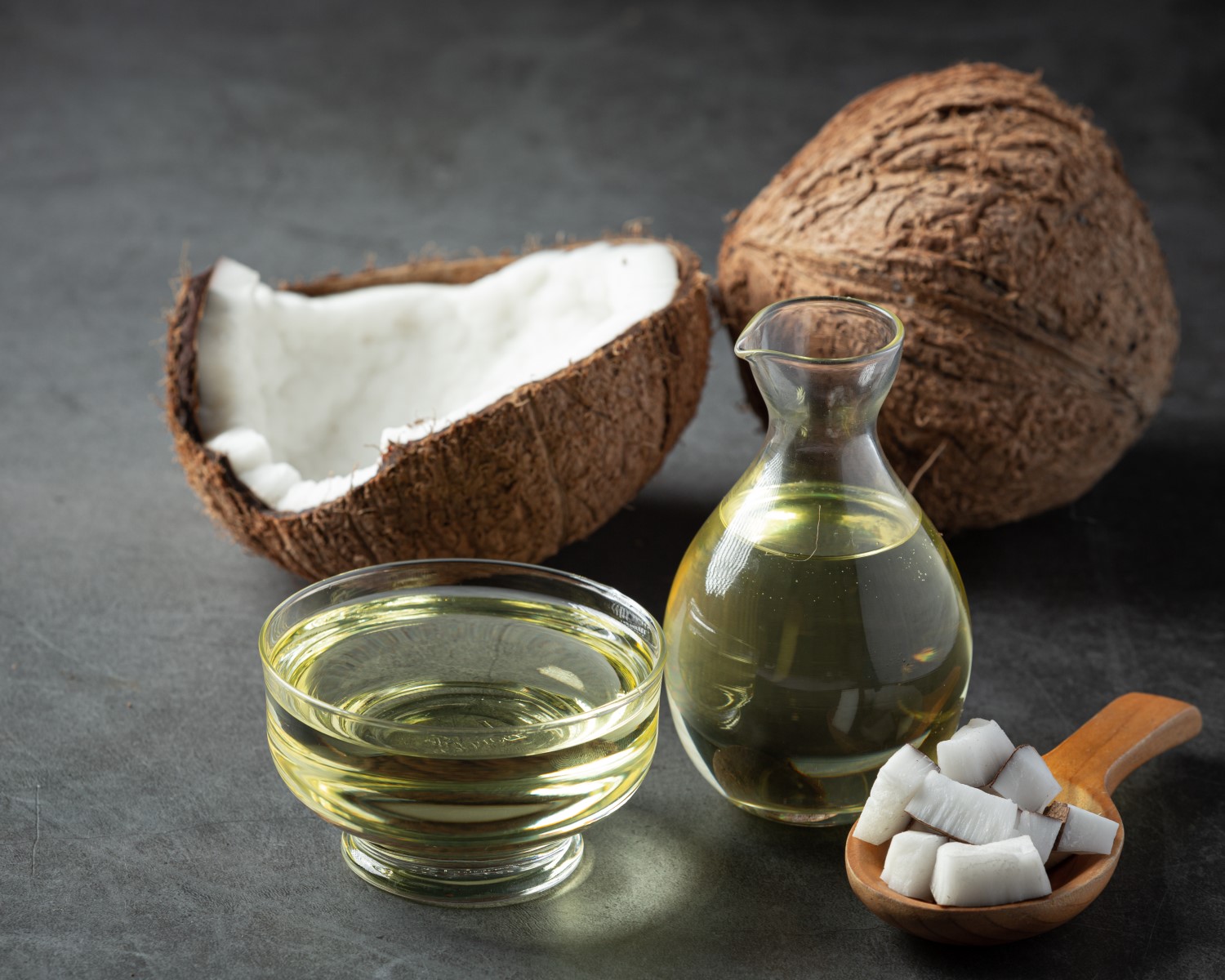
Coconut oil is a vegetable oil extracted from the flesh of the coconut, the fruit
of the coconut palm (Cocos nucifera). Very popular in tropical regions, it has
been used for centuries in cooking, body care, and other cosmetics.
Properties and Benefits
Coconut oil has properties that make it unique and beneficial for various uses.
Antimicrobial: Thanks to lauric acid, it can fight bacteria, viruses, and fungi, such as Candida albicans.
Moisturizing and Nourishing: Its richness in fatty acids makes it an excellent moisturizer for skin and hair.
Antioxidant: Polyphenols protect cells from oxidative damage.
Energy: MCFAs are rapidly metabolized by the liver, providing a rapid source of energy, useful for ketogenic diets.
Heat stability: Its high saturated fat content makes it stable at high temperatures, ideal for cooking.
Uses of Coconut Oil
Coconut oil is used in many areas. Here's a detailed overview of its applications:
Cooking
Baking: Thanks to its high smoke point (around 175°C for virgin oil, 200°C for refined oil), it's perfect for frying, sautéing, or baking. It replaces butter or vegetable oil in cake, muffin, or granola recipes, adding a touch of tropical flavor.
Smoothies and drinks: A spoonful of coconut oil can be added to smoothies or bulletproof coffee for an energy boost.
Special diets: Highly valued in ketogenic or paleo diets due to its MCFAs, which promote ketone production.
Preservation: It is used in some cultures to preserve food due to its antimicrobial properties.
Tip: Choose virgin oil for cold or slightly heated dishes to preserve its nutrients.
Cosmetics and body care
Skin moisturizer: Applied directly, it nourishes dry skin, soothes irritation, and
can help treat eczema or psoriasis.
Hair care: As a pre-shampoo mask, it strengthens hair, reduces frizz, and moisturizes the scalp.
Makeup remover: Effective for removing makeup, including waterproof mascara, while moisturizing the skin.
Lip balm: It protects and repairs chapped lips.
Natural toothpaste: Mixed with baking soda, it is used in homemade toothpaste recipes for its antibacterial properties.
Coconut oil is a vegetable oil extracted from the flesh of the coconut, the fruit
of the coconut palm (Cocos nucifera). Very popular in tropical regions, it has
been used for centuries in cooking, body care, and other cosmetics.
Properties and Benefits
Coconut oil has properties that make it unique and beneficial for various uses.
Antimicrobial: Thanks to lauric acid, it can fight bacteria, viruses, and fungi, such as Candida albicans.
Moisturizing and Nourishing: Its richness in fatty acids makes it an excellent moisturizer for skin and hair.
Antioxidant: Polyphenols protect cells from oxidative damage.
Energy: MCFAs are rapidly metabolized by the liver, providing a rapid source of energy, useful for ketogenic diets.
Heat stability: Its high saturated fat content makes it stable at high temperatures, ideal for cooking.
Uses of Coconut Oil
Coconut oil is used in many areas. Here's a detailed overview of its applications:
Cooking
Baking: Thanks to its high smoke point (around 175°C for virgin oil, 200°C for refined oil), it's perfect for frying, sautéing, or baking. It replaces butter or vegetable oil in cake, muffin, or granola recipes, adding a touch of tropical flavor.
Smoothies and drinks: A spoonful of coconut oil can be added to smoothies or bulletproof coffee for an energy boost.
Special diets: Highly valued in ketogenic or paleo diets due to its MCFAs, which promote ketone production.
Preservation: It is used in some cultures to preserve food due to its antimicrobial properties.
Tip: Choose virgin oil for cold or slightly heated dishes to preserve its nutrients.
Cosmetics and body care
Skin moisturizer: Applied directly, it nourishes dry skin, soothes irritation, and
can help treat eczema or psoriasis.
Hair care: As a pre-shampoo mask, it strengthens hair, reduces frizz, and moisturizes the scalp.
Makeup remover: Effective for removing makeup, including waterproof mascara, while moisturizing the skin.
Lip balm: It protects and repairs chapped lips.
Natural toothpaste: Mixed with baking soda, it is used in homemade toothpaste recipes for its antibacterial properties.