

COCOA BUTTER
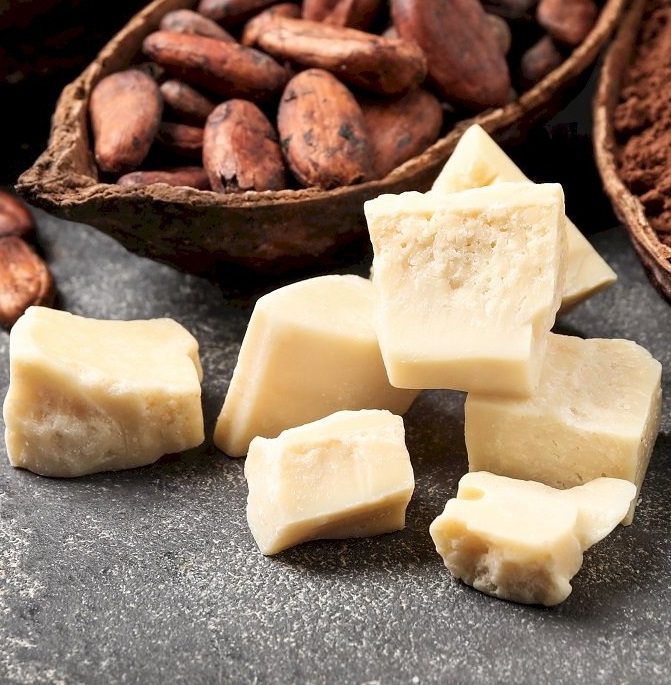
Cocoa butter is a vegetable fat extracted from cocoa beans (Theobroma cacao)
after fermentation, roasting, and grinding. It ranges from creamy to pale yellow
in color and has a solid texture at room temperature, melting at approximately
34-38°C (close to body temperature), giving it a characteristic smoothness. Its
rich, chocolatey aroma and unique properties make it a sought-after ingredient
in the food, cosmetic, and pharmaceutical industries.
Uses of Cocoa Butter
1-In Food
Chocolate: A key ingredient in the manufacture of chocolate (dark, milk, white).
It gives chocolate its smooth texture, shine, and melt-in-the-mouth feel. Cocoa
butter is essential for coating the cocoa and sugar particles, ensuring a silky
texture.
Pastry and Confectionery: Used in ganaches, pralines, frostings, and desserts for its richness and ability to harden at room temperature. Dairy Products and
Alternatives: Incorporated into some ice creams, plant-based butters, or lactose-free products to improve texture.
Cooking: Can be used as a cooking fat or as a substitute for regular butter in vegan recipes.
2- In Cosmetics
Skin Care: Its rich texture and moisturizing properties make it a key ingredient
in creams, lip balms, lotions, and body butters. It forms a protective barrier on
the skin, preventing dehydration.
Hair Care: Used in masks and conditioners to nourish dry or damaged hair, restoring shine and suppleness.
Sun Care: Incorporated into some sunscreens for its protective and soothing properties. Handmade Soaps: Provides a creamy lather and intense hydration. c) In the
3- Pharmaceutical Industry
Suppositories: Thanks to its melting point close to body temperature, it is used as a base for suppositories, allowing for a controlled release of active ingredients.
Medicinal Ointments and Balms: Used for its emollient properties in the treatment of dry or irritated skin.
4- Other uses
Aromatherapy: Sometimes used as a massage oil or as a base for essential oils. Crafts: Incorporated into the manufacture of natural candles for its texture and fragrance.
Benefits of Cocoa Butter
1-For Health
Cardiovascular Health: Monounsaturated fatty acids (oleic acid) can help lower bad cholesterol (LDL) while increasing good cholesterol (HDL), supporting heart health when consumed in moderation.
Antioxidants: Polyphenols and flavonoids protect cells from oxidative damage, potentially reducing the risk of chronic diseases.
Mild Stimulant Effect: Theobromine and caffeine in small amounts can improve alertness and mood.
Energy Source: High in calories (approximately 900 kcal/100 g), it provides sustained energy.
2-For the Skin
Deep Hydration: Forms a lipid barrier that retains moisture, ideal for dry,
eczematous, or chapped skin.
Healing: Promotes skin regeneration, helping to reduce the appearance of scars, stretch marks, and wrinkles thanks to its antioxidants and vitamin E. Aggressor Protection: Protects the skin from damage caused by cold, wind, or sun.
3-For Hair
Nourishing: Strengthens brittle hair and moisturizes dry scalps.
Protection: Envelops the hair fiber, protecting against external aggressions (heat, pollution).
Cocoa butter is a vegetable fat extracted from cocoa beans (Theobroma cacao)
after fermentation, roasting, and grinding. It ranges from creamy to pale yellow
in color and has a solid texture at room temperature, melting at approximately
34-38°C (close to body temperature), giving it a characteristic smoothness. Its
rich, chocolatey aroma and unique properties make it a sought-after ingredient
in the food, cosmetic, and pharmaceutical industries.
Uses of Cocoa Butter
1-In Food
Chocolate: A key ingredient in the manufacture of chocolate (dark, milk, white).
It gives chocolate its smooth texture, shine, and melt-in-the-mouth feel. Cocoa
butter is essential for coating the cocoa and sugar particles, ensuring a silky
texture.
Pastry and Confectionery: Used in ganaches, pralines, frostings, and desserts for its richness and ability to harden at room temperature. Dairy Products and
Alternatives: Incorporated into some ice creams, plant-based butters, or lactose-free products to improve texture.
Cooking: Can be used as a cooking fat or as a substitute for regular butter in vegan recipes.
2- In Cosmetics
Skin Care: Its rich texture and moisturizing properties make it a key ingredient
in creams, lip balms, lotions, and body butters. It forms a protective barrier on
the skin, preventing dehydration.
Hair Care: Used in masks and conditioners to nourish dry or damaged hair, restoring shine and suppleness.
Sun Care: Incorporated into some sunscreens for its protective and soothing properties. Handmade Soaps: Provides a creamy lather and intense hydration. c) In the
3- Pharmaceutical Industry
Suppositories: Thanks to its melting point close to body temperature, it is used as a base for suppositories, allowing for a controlled release of active ingredients.
Medicinal Ointments and Balms: Used for its emollient properties in the treatment of dry or irritated skin.
4- Other uses
Aromatherapy: Sometimes used as a massage oil or as a base for essential oils. Crafts: Incorporated into the manufacture of natural candles for its texture and fragrance.
Benefits of Cocoa Butter
1-For Health
Cardiovascular Health: Monounsaturated fatty acids (oleic acid) can help lower bad cholesterol (LDL) while increasing good cholesterol (HDL), supporting heart health when consumed in moderation.
Antioxidants: Polyphenols and flavonoids protect cells from oxidative damage, potentially reducing the risk of chronic diseases.
Mild Stimulant Effect: Theobromine and caffeine in small amounts can improve alertness and mood.
Energy Source: High in calories (approximately 900 kcal/100 g), it provides sustained energy.
2-For the Skin
Deep Hydration: Forms a lipid barrier that retains moisture, ideal for dry,
eczematous, or chapped skin.
Healing: Promotes skin regeneration, helping to reduce the appearance of scars, stretch marks, and wrinkles thanks to its antioxidants and vitamin E. Aggressor Protection: Protects the skin from damage caused by cold, wind, or sun.
3-For Hair
Nourishing: Strengthens brittle hair and moisturizes dry scalps.
Protection: Envelops the hair fiber, protecting against external aggressions (heat, pollution).