

CASHEW KERNEL
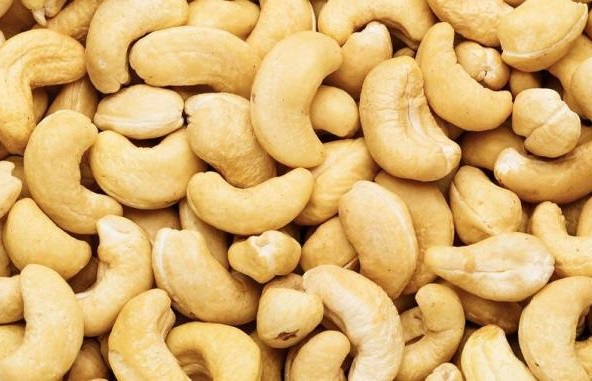
The cashew kernel, or cashew nut, is the edible kernel of the fruit of the cashew tree (Anacardium
occidentale), a tropical tree belonging to the Anacardiaceae family, native to northeastern Brazil.
Discovered by the Portuguese in the 16th century, the cashew tree was introduced to Africa, Asia
(particularly India and Vietnam), and other tropical regions. Today, the world's leading producers are
Côte d'Ivoire, India, Vietnam, and Nigeria.
Uses of cashew kernels
Cashew kernels are versatile and used in many areas:
Culinary uses
Snacks : Roasted and salted, cashew nuts are popular as appetizers or snacks.
Cooking : They are used
whole to garnish dishes (curries, salads) or ground to thicken sauces (korma, Indian dishes). In South
Asia, they are used as a base for desserts such as kaju barfi.
Vegan Substitutes: Thanks to their creamy texture, they are transformed into:
Fauxmage: Plant-based cheese made from fermented cashews.
Creams and Sauces: To replace dairy cream in soups or salad dressings.
Cashew Butter: An alternative to peanut butter.
Beverages: The kernels are sometimes ground to produce alcoholic beverages or plant-based milks.
végétaux.
Cosmetic Uses
Cashew Oil: Extracted by cold pressing, it is rich in vitamin E (21.5 mg/100 g) and unsaturated fatty
acids (80%). Used to regenerate the skin, it is prized in traditional and modern African cosmetics.
Hair care: The oil nourishes and strengthens hair.
Industrial uses
Cashew balm:: The phenolic resin extracted from the shell is used to produce varnishes, insecticides,
inks, and friction materials (brakes).
Cardanol : Derived from the shell liquid, it is used in resins, paints, and lubricants.
The cashew kernel, or cashew nut, is the edible kernel of the fruit of the cashew tree (Anacardium
occidentale), a tropical tree belonging to the Anacardiaceae family, native to northeastern Brazil.
Discovered by the Portuguese in the 16th century, the cashew tree was introduced to Africa, Asia
(particularly India and Vietnam), and other tropical regions. Today, the world's leading producers are
Côte d'Ivoire, India, Vietnam, and Nigeria.
Uses of cashew kernels
Cashew kernels are versatile and used in many areas:
Culinary uses
Snacks : Roasted and salted, cashew nuts are popular as appetizers or snacks.
Cooking : They are used
whole to garnish dishes (curries, salads) or ground to thicken sauces (korma, Indian dishes). In South
Asia, they are used as a base for desserts such as kaju barfi.
Vegan Substitutes: Thanks to their creamy texture, they are transformed into:
Fauxmage: Plant-based cheese made from fermented cashews.
Creams and Sauces: To replace dairy cream in soups or salad dressings.
Cashew Butter: An alternative to peanut butter.
Beverages: The kernels are sometimes ground to produce alcoholic beverages or plant-based milks.
végétaux.
Cosmetic Uses
Cashew Oil: Extracted by cold pressing, it is rich in vitamin E (21.5 mg/100 g) and unsaturated fatty
acids (80%). Used to regenerate the skin, it is prized in traditional and modern African cosmetics.
Hair care: The oil nourishes and strengthens hair.
Industrial uses
Cashew balm:: The phenolic resin extracted from the shell is used to produce varnishes, insecticides,
inks, and friction materials (brakes).
Cardanol : Derived from the shell liquid, it is used in resins, paints, and lubricants.